




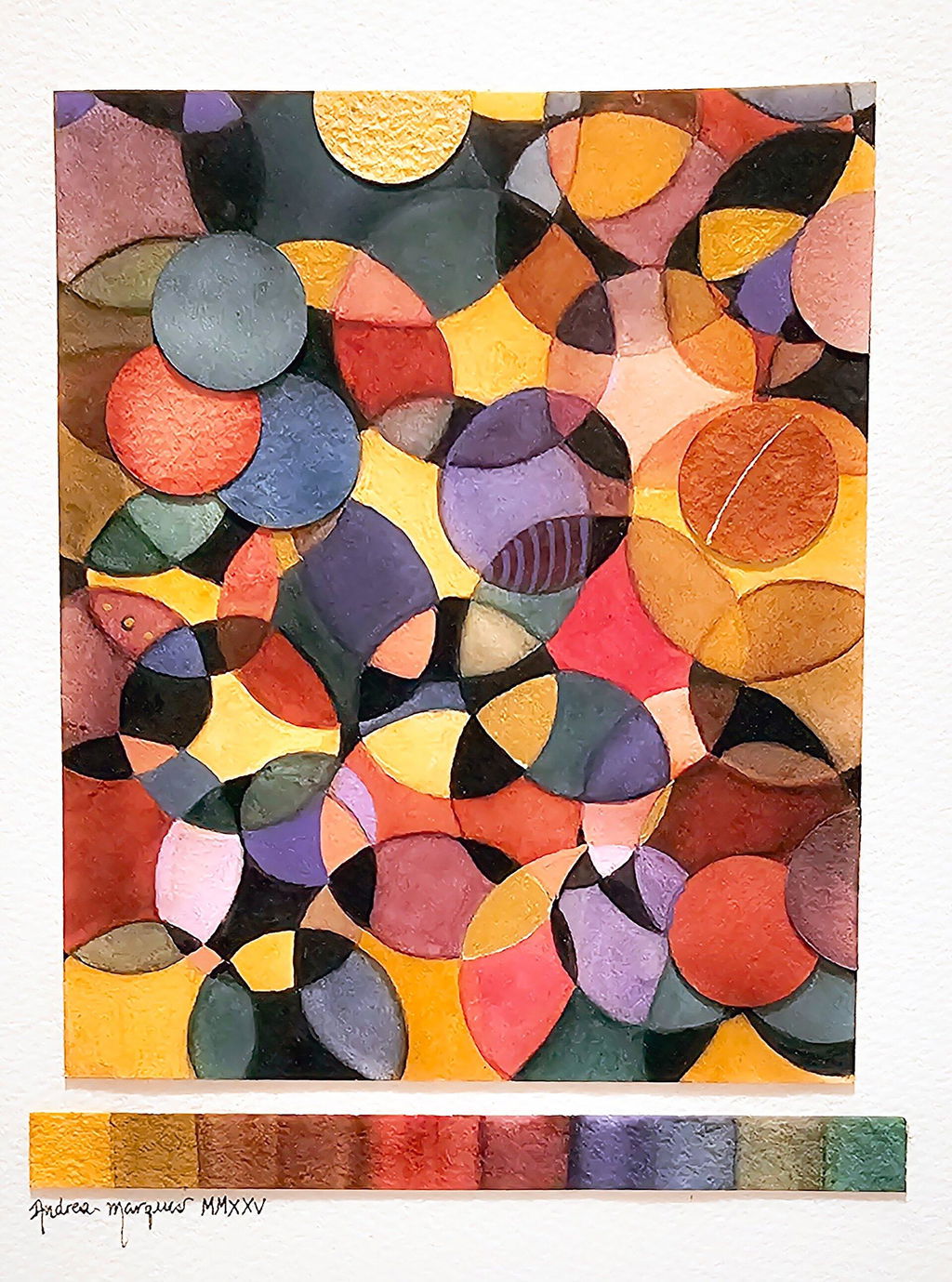

Cuesta algo más diluirla. Magnífico color y texturas
Calidad extraordinaria. Muy recomendable. Gracias
Estoy encantado con esta tinta, maravilloso. Gracias
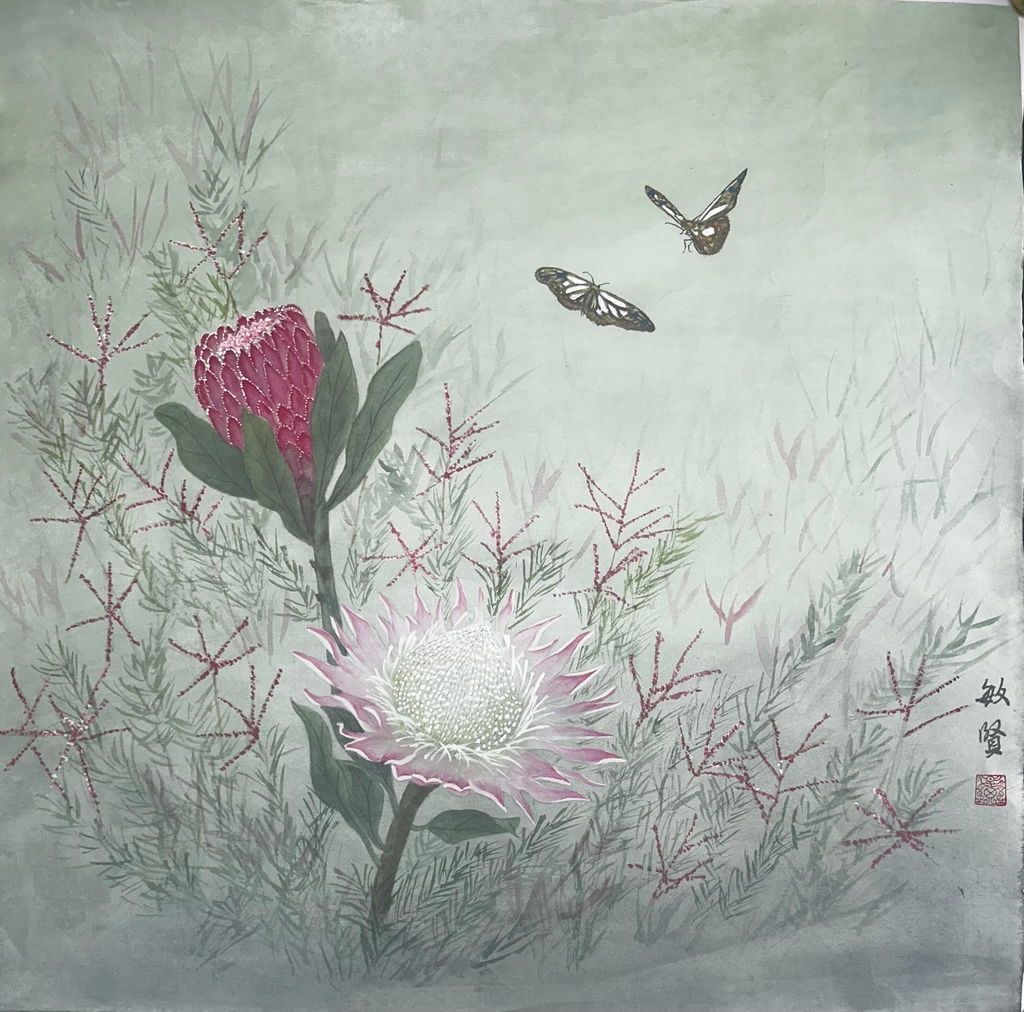
The paper is good for drawing colourful flower, which can show the petal lively
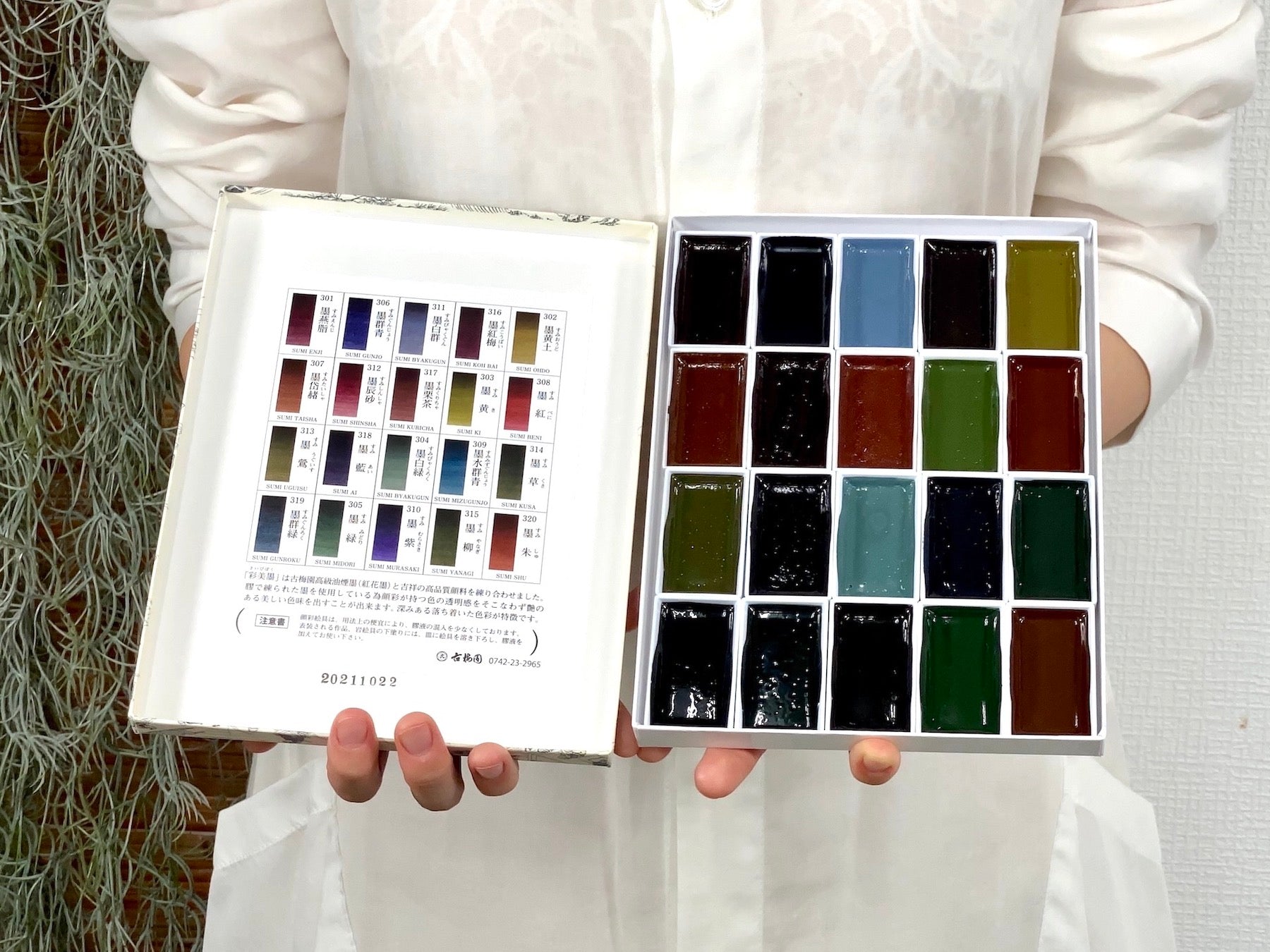
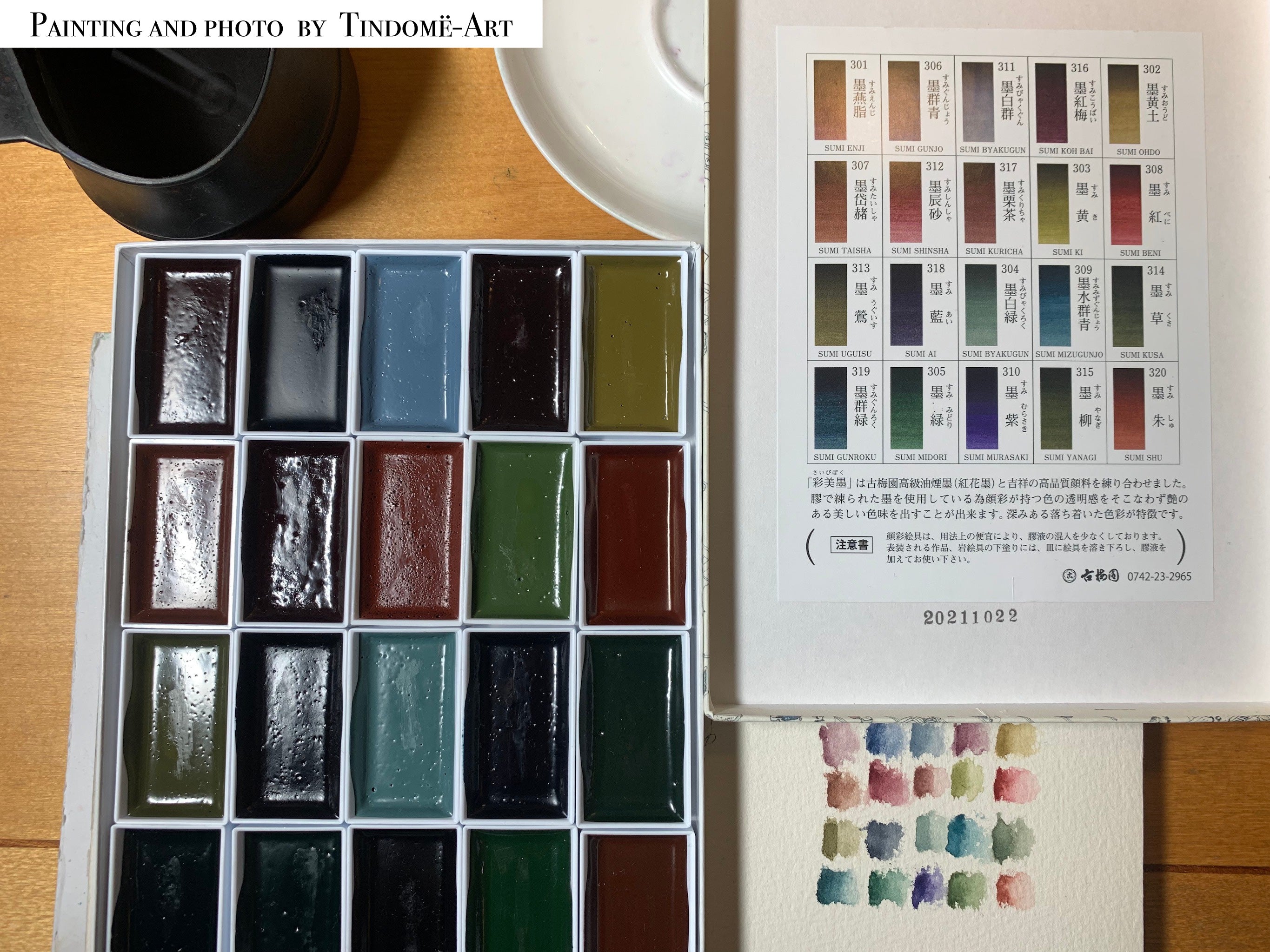
Saibiboku — "the ink of colour and beauty" — begins where a painter's palette rarely does: inside an inkstick. Kobaien's five-star Koukaboku, ground from rapeseed-oil soot by a method unchanged for four centuries, is worked into fine particles and blended with pigments from Kissho, one of Kyoto's oldest makers of gansai watercolours.
Where the colour runs deep, the ink speaks; where it runs pale, the pigment does; in between, the glue bound into the sumi lends every hue a quiet lustre that ordinary gansai rarely holds.
The result keeps a gansai's transparency, but carries more weight, and more restraint, than the usual palette — and even unopened, the tablets hold a faint trace of ink's scent.
It is less a shortcut to colour than an extension of ink itself: the same hand, the same centuries-old sumi, carried past black into hue.
For anyone who already grinds Koukaboku for their line work, Saibiboku offers a way to bring that same ink into colour, without leaving the discipline sumi-e is built on.
SIZE W:Width, L:Length, T:Thickness, Wgt:Weight.

These paints are made of ink kneaded with glue. This makes it possible to express beautiful colors with the transparency and luster of Gansai ( a special pigment for Japanese traditional watercolor paintings ) colors.

Note:
These paints are made with less glue than usual. When making a scroll, or using it as a primer for natural mineral pigment painting, dissolve the paint in a separate dish and add a new glue solution.
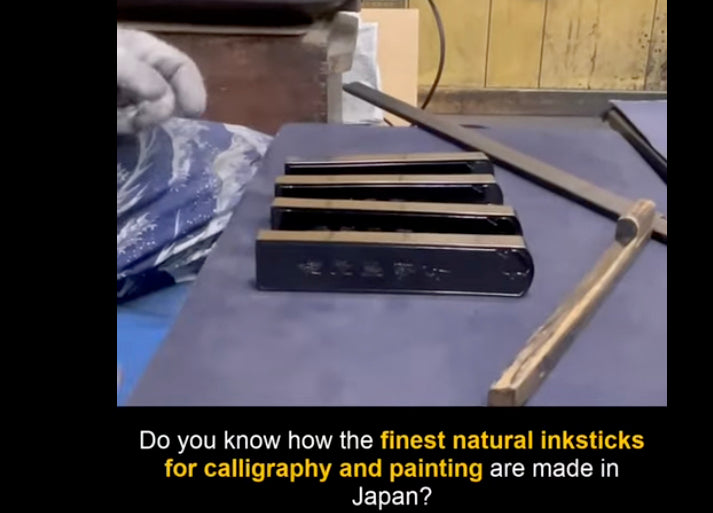

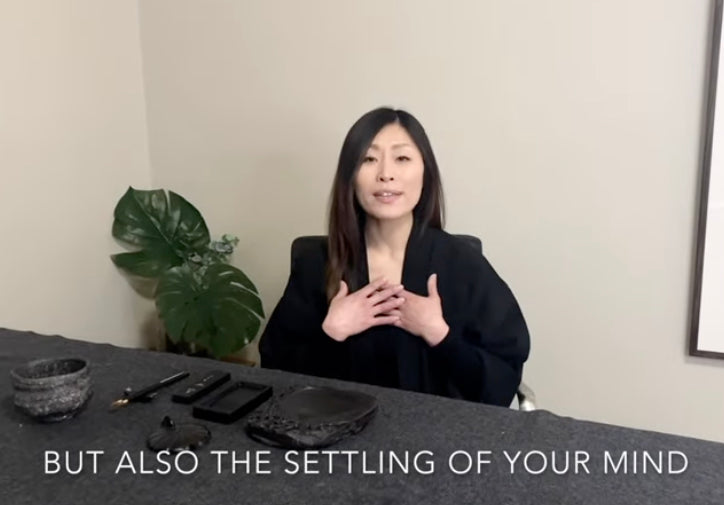

Ms. Junko Azukawa, a contemporary calligrapher and ink painter in Australia, explains how to use stickinks.


!