


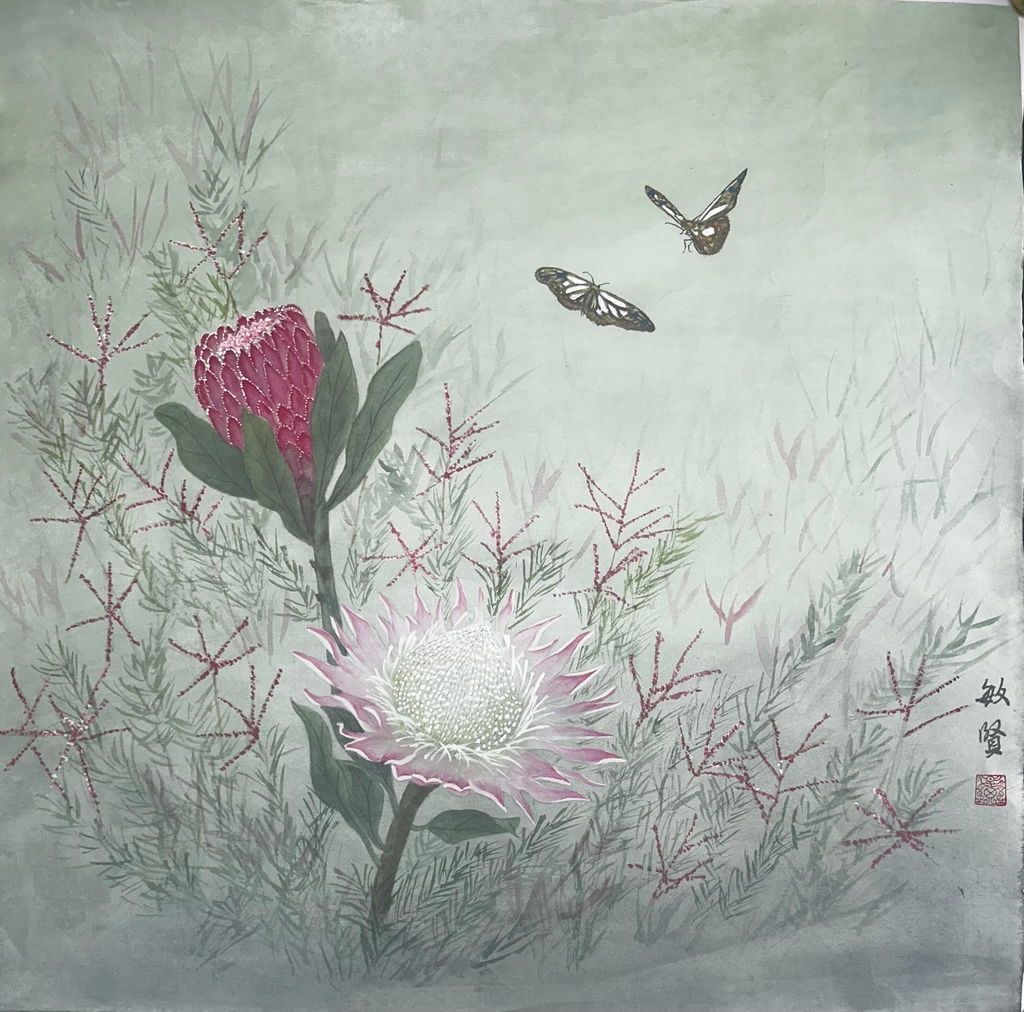
Cuesta algo más diluirla. Magnífico color y texturas
Calidad extraordinaria. Muy recomendable. Gracias
Estoy encantado con esta tinta, maravilloso. Gracias
The paper is good for drawing colourful flower, which can show the petal lively
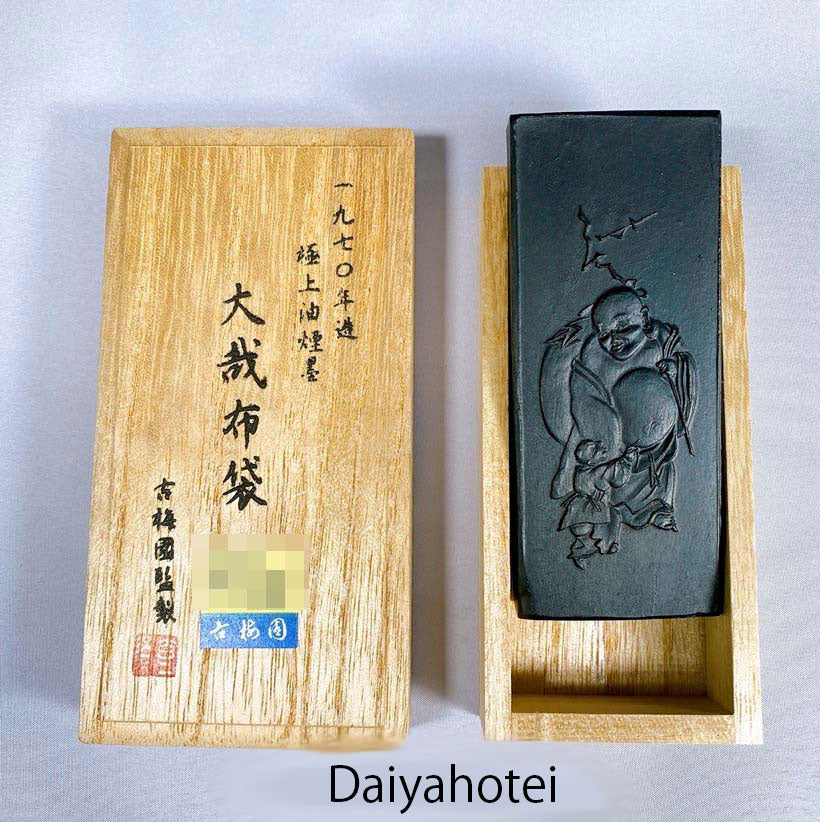
Daiyahotei takes its name from Daiya (大哉), magnanimous, and Hotei (布袋), the Japanese god of good fortune, its design drawn from a painting by Kano Tanyu, a celebrated painter working from the late Momoyama period into the early Edo period.
Made from superfine rapeseed oil smoke and a botanical blue pigment, this stick was produced in 1970, meaning it now carries some 56 years of quiet maturation — the kind of long rest that lets a sumi ink's color settle and its character deepen, prized by collectors of koboku, antique inksticks.
At 38mm wide, 95mm long, 13mm thick, and 54 grams, it's a substantial piece as much for the shelf as for the inkstone. For anyone drawn to Kobaien's history of translating classical Japanese painting into ink itself, Daiyahotei offers both a picture of good fortune and half a century of aging condensed into a single stick.
SIZE: Width:38mm Length:95mm Thickness:13mm
Weight:54gram

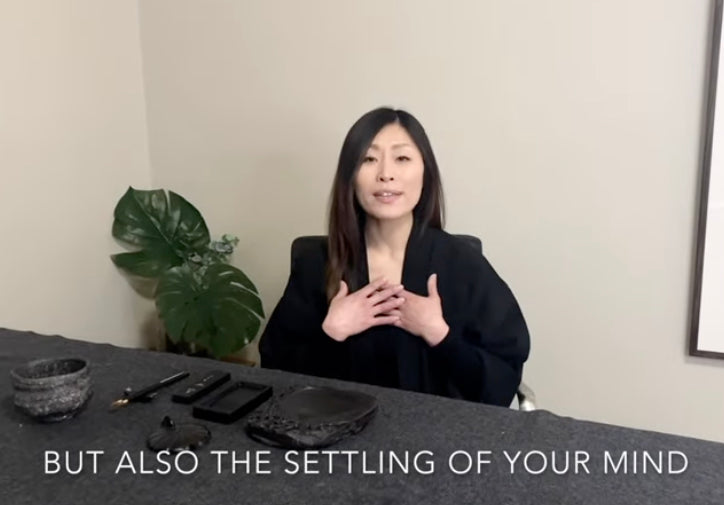

Ms. Junko Azukawa, a contemporary calligrapher and ink painter in Australia, explains how to use stickinks.


!