


Cuesta algo más diluirla. Magnífico color y texturas
Calidad extraordinaria. Muy recomendable. Gracias
Estoy encantado con esta tinta, maravilloso. Gracias
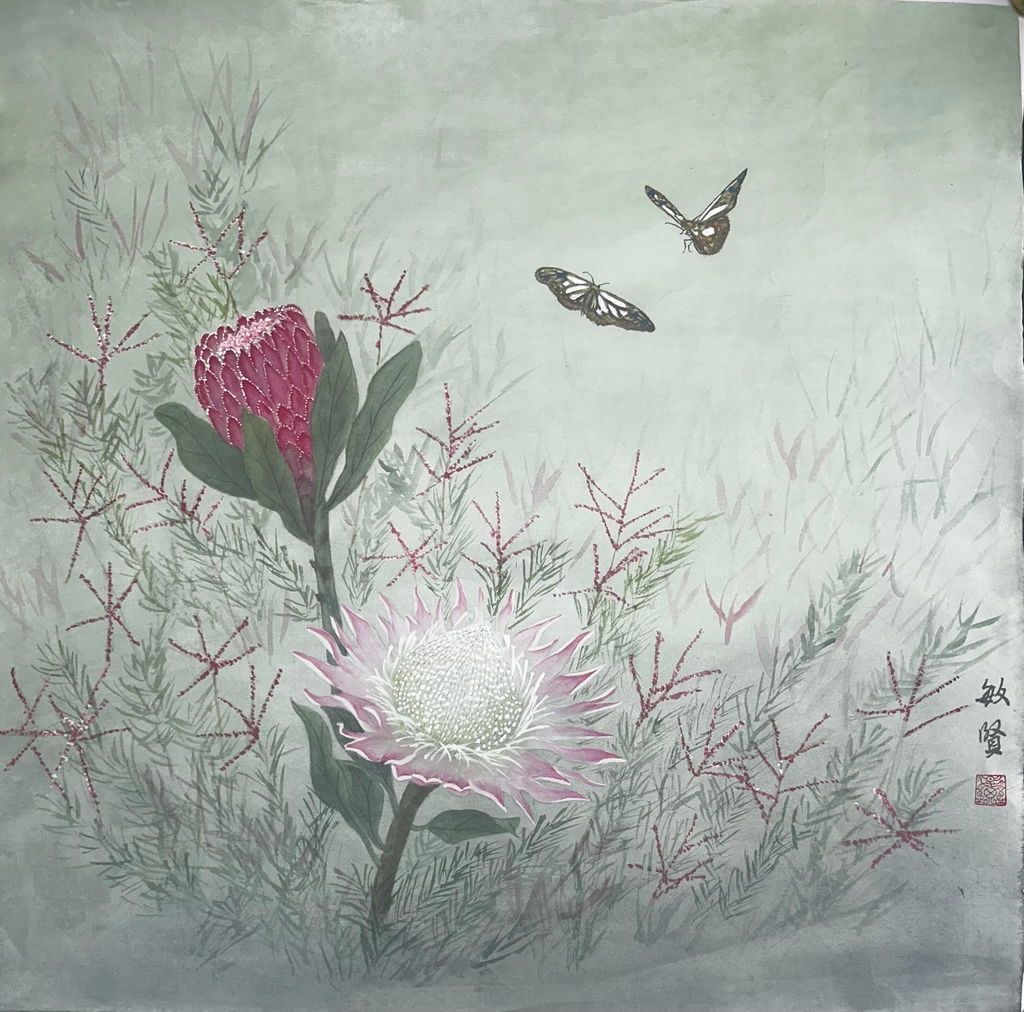
The paper is good for drawing colourful flower, which can show the petal lively
Kyushu Bishimon Ken takes its name from Kyushu (歙州), an ancient Chinese province, Bishimon (眉子紋), a pattern resembling human eyebrows, and Ken (硯), inkstone. Kyushu slate, alongside stone from Tankei, was one of ancient China's two great sources of inkstone material, and this piece was acquired by Kobaien decades ago; ICHI has secured limited permission to sell just ten of them.
Harder than Tankei stone, its surface is dense and rough, almost like sharkskin, making it especially suited to hard inksticks such as pine soot (shōen).
The eyebrow-like patterns across its surface give it real ornamental beauty alongside its function. At 150mm long, 85mm wide, and 10mm thick, with an 8.5mm ink pool and 215 grams, it comes in a dedicated wooden box, portable enough to travel with. Inkstones of this kind, in this size, from Kyushu Bishimon stone, are no longer made even in China.
Inkstone:
150 millimetre in length
85 millimetre in width,
10 millimetre in thickness.
8.5 mm in liquid pool
215 grams weight
Box:
175 millimetre in length
110 millimetre in width,
20 millimetre in thickness.
115 grams weight
*The shipping weight includes the weight of the packaging materials.



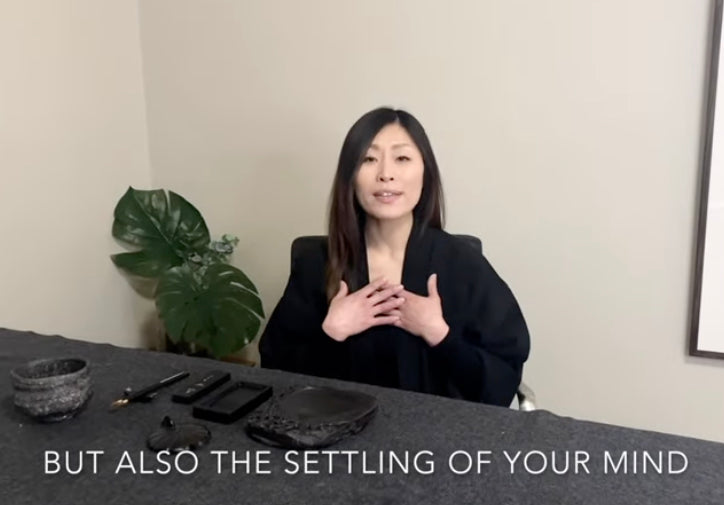

Ms. Junko Azukawa, a contemporary calligrapher and ink painter in Australia, explains how to use stickinks.


!