
Cuesta algo más diluirla. Magnífico color y texturas
Calidad extraordinaria. Muy recomendable. Gracias
Estoy encantado con esta tinta, maravilloso. Gracias
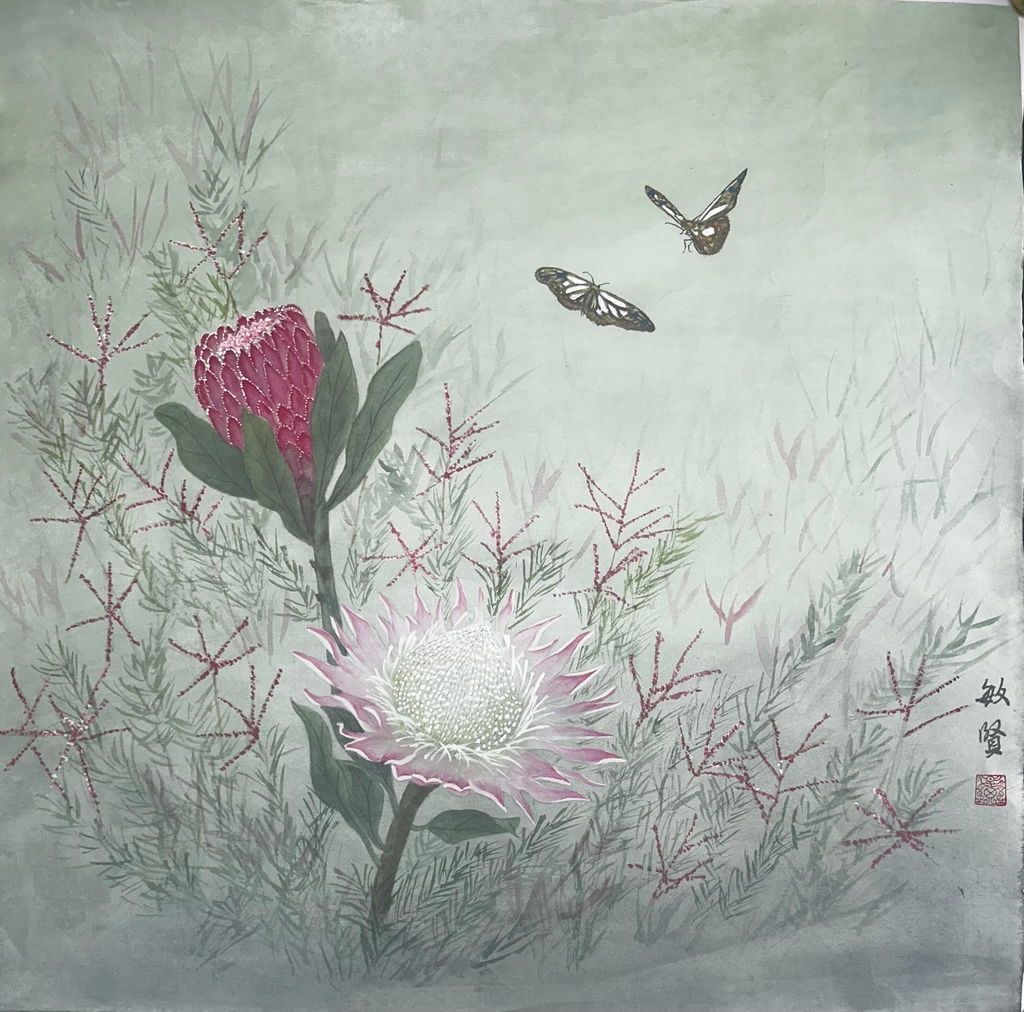
The paper is good for drawing colourful flower, which can show the petal lively
For calligraphers and painters ready to go beyond the basics, this is where Kobaien's most demanding inks live: lacquer-black Shitsuboku, fast-grinding sticks built for large-format work, rare pine soot, ink bound with donkey and boar hide glue, and sticks finished in gold leaf.
Explore what advanced practice calls for.

Shitsuboku — "lacquer black" — is Kobaien's finest grade of ink, made from ultra-fine rapeseed oil soot under a secret house process.
Ground dark, it dries with a lacquer-like sheen; diluted, it turns rich brown.
Melbourne-based ink artist Junko Azukawa, whose work hangs in the National Gallery of Victoria, favors these sticks in her practice.

Jōfuku — roughly 35 × 136 cm — is the standard paper size for exhibition-scale calligraphy, half of a full sheet of gasen paper.
Covering that much surface demands ink you can grind quickly and in volume.
These brownish-black sticks are shaped and formulated specifically for that: fast-grinding, ample yield, built for calligraphers working boldly and big.

Pine soot ink is Japan's older, rarer tradition — coarser and less glossy than oil-soot ink, prized for how it bleeds and layers into soft, atmospheric grays rather than crisp black.
Long favored by painters for rendering texture like hair or foliage, shoenboku rewards those who want expressive tonal depth over glassy uniformity.

Standard sumi ink is bound with cow or deer hide glue. Kisho Nikawa inksticks ( Rare glue inksticks) use rarer donkey, goat, and wild boar glues — the same family behind Kobaien's legendary Kōfuku-ji ink, among the most prized inks made in Japan.
Expect striking gloss, exceptional elasticity, and a deeper, more complex black.

Gold leaf has decorated fine sumi inksticks for centuries — a traditional finishing mark reserved for top-quality sticks, prized for its beauty and because gold never tarnishes, preserving the ink over decades.
Calligraphers have long favored gold-leafed sticks for kuzushiji (cursive script), saying the gold particles smooth the brush's glide.
!